 TubeBarPrankCalls.com

The Tube Bar Prank Calls Legacy
The Tube Bar prank calls are a body of bootleg audio that emerged from the New York–New Jersey metro area in the late 1970s and circulated widely through the 1980s and 1990s. At their core, these recordings capture repeated telephone confrontations in which callers used invented names and absurd premises to provoke bewilderment and outrage from bar staff. The phenomenon grew from local barroom humor, urban working class speech patterns, and a regional tradition of telephone pranks that predates mobile networks. The original locale associated with the tapes is a Jersey City tavern known informally as Tube Bar, which functioned as a neighborhood fixture where staff, owners, and regulars provided the raw reactions that made the recordings memorable.
The social backdrop matters: dense New Jersey neighborhoods, frequent cross Hudson commuting to New York, and a nightlife culture built around small bars provided both the material and the audience. Telephone lines and cheap cassette recorders were accessible to many in that era, turning ephemeral jokes into repeatable media artifacts. Over time the tapes accumulated mythic status among college radio listeners, road crews, and later internet subcultures.
Key people, recording practices, and distribution
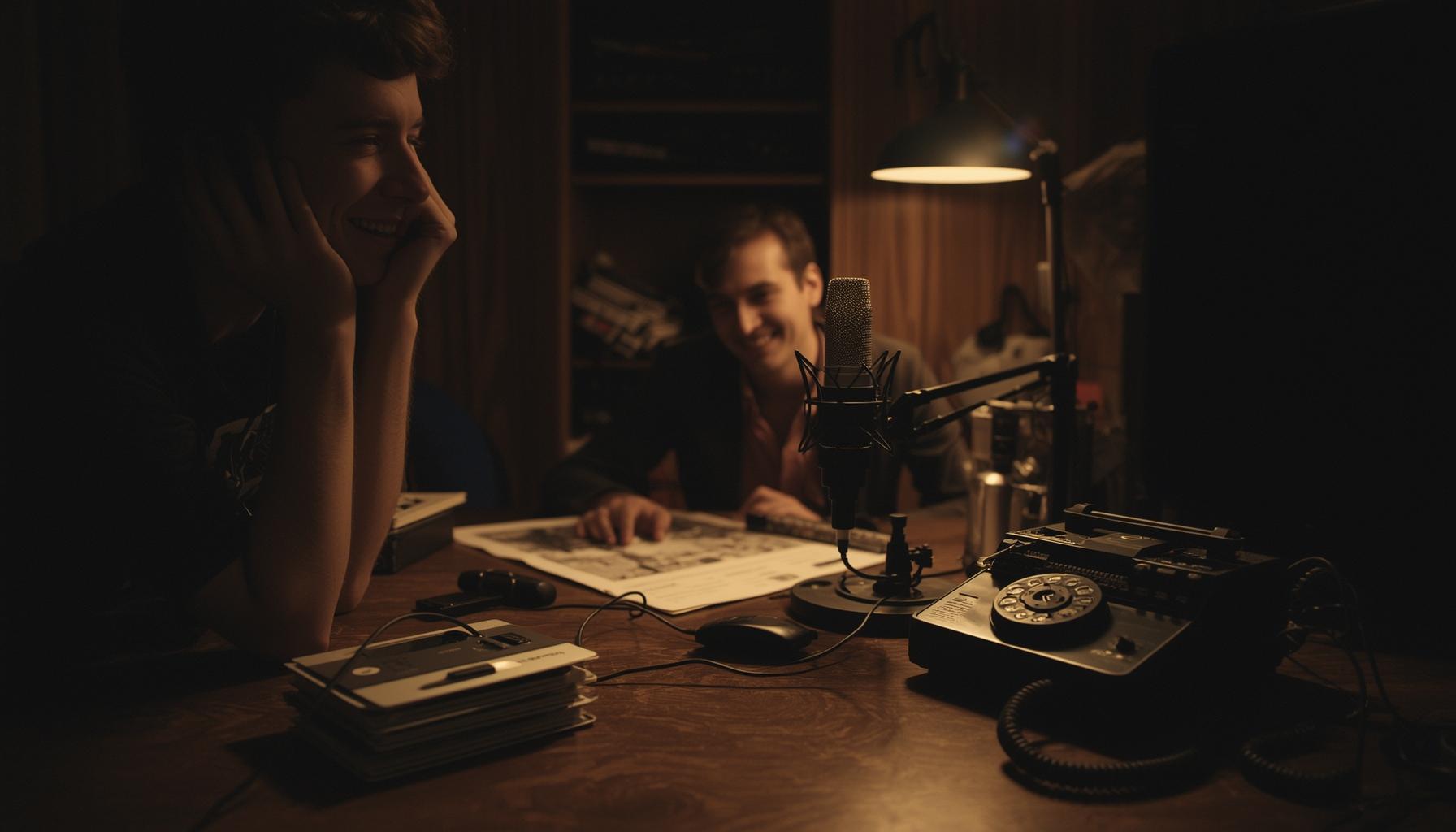
The prank-call performers who created the earliest tapes were often friends and local comedians. Their identities circulated anonymously for years; the emphasis was on persona and recurring names rather than on celebrity. On the receiving end were a handful of owners, bartenders, servers, and regular customers whose voices and responses became central to the material. Producers and early distributors were typically tape traders who duplicated cassettes and passed them hand to hand at parties, record stores, and college campuses.
Recording practices reflected the technology of the era. Calls were recorded on answering machines or straight onto cassette decks with telephone adapters. Copy quality depended on deck calibration and tape grade; many surviving copies show hiss, wow, and frequency loss. Packaging was homemade: handwritten track lists on folded paper, photocopied covers, and circulating bootleg aesthetics that signaled underground status. Those physical artifacts helped establish provenance among collectors.
Below is a summary of common distribution channels and their characteristics, with real period markers that show the transition from analog circulation to internet diffusion. This information appears in the middle of this part to show how mediums shaped reach and preservation.
| Channel and era | Typical years | Geographic reach | Characteristic features | Example platforms or contexts |
|---|---|---|---|---|
| Local tape exchange | late 1970s–mid 1980s | City and neighborhood level | Hand-dubbed cassettes, photocopied inserts, word-of-mouth | Record stores, parties, bar patrons |
| Mail-order cassette trading | early 1980s–1990s | National within US | Small catalogs, cash or money order, trading circs | Zine ads, classified flyers |
| College radio and pirate broadcasts | 1980s–1990s | Regional to national | On-air bootleg plays, tape drops, increased notoriety | FM college stations, low-power AM |
| Early MP3 and file sharing | late 1990s–early 2000s | Global via internet | Lossy compression, fragmented uploads, metadata chaos | MP3.com era, peer-to-peer networks |
| Video platforms and streaming | 2005 onward | Global, viral potential | Reuploads with visualizers, easier discovery, takedown episodes | YouTube, social sharing sites |
After the internet era began, copies multiplied rapidly. Metadata errors, variant edits, and re-cuts proliferated, complicating efforts to track original recordings.
Humor techniques, ethics, and responses
The material relies on recurring methods: ambiguity about the caller’s intention, repeated use of invented names that sound obscene or absurd, and escalation through insistence and feigned confusion. Timing and improvisation are crucial; the most effective calls captured authentic frustration from the person on the line. Audience reaction—laughter from listeners and embarrassed silence from targets—became part of the comic rhythm.
Ethical boundaries were debated from early on. Targets were private citizens, often without full consent to distribution. Concerns focused on privacy, humiliation, and potential reputational harm. Legal risk existed: wiretapping statutes, invasion of privacy claims, and commercial liability for publishers who profited from the tapes. Fans argued for free expression and cultural value, while critics described harassment and exploitation when calls targeted vulnerable people or relied on racial stereotypes. Public responses ranged from amusement in local bars to angry calls for removal and legal letters in certain instances.
Reactions from staff and patrons varied. Some embraced the notoriety and even sold copies or appeared amused in later recordings. Others expressed anger or pursued legal remedies. Local media coverage in the 1980s recorded both the novelty and the discomfort that these tapes provoked.
Cultural influence, preservation, and official presence
The prank calls influenced later radio prank formats, sketch comedy creators, and online prank channels. Comedians and radio hosts adapted the escalation techniques and absurd name play. The shift to digital transformed availability and monetization, with early MP3 uploads in the late 1990s enabling far wider audiences. Viral moments on social platforms in the 2000s renewed mainstream awareness.
Preservation efforts include collectors who digitize original cassettes, libraries that accept oral history donations, and fan projects that annotate variants. Authenticity disputes occur because many releases are edited, overdubbed, or misattributed. Provenance is often traced through chain-of-custody notes on cassette PC copies and collage-style photocopies.
The official site for the corpus serves a dual role: curatorial steward and rights claimant. Its mission includes authorized releases, verified metadata, and handling sensitive content through disclaimers and selective editing. Policies around streaming and downloads balance access with concerns about consent and monetization. Fan communities contribute commentary, transcripts, and oral histories that enrich contextual understanding but also introduce subjective narratives.
Academic coverage appears in folklore and media studies as a case of oral transmission, bootleg culture, and shifting norms of public speech. Research gaps remain around complete cataloging and legal histories. Recommended primary resources are digitized cassettes from verified collectors, contemporaneous radio logs, and court records when available.
The phenomenon of the Tube Bar recordings shows how a local prank tradition can become a persistent cultural object. Through preservation efforts and an authorized online presence, the material continues to be examined, contested, and referenced across comedy, media, and fan communities.